Lilacs (Syringa vulgaris) are usually admired from a garden path or an open window, where their fragrance drifts through the air for only a brief moment each spring. But surprisingly, lilacs are not only ornamental—they can also be used in the kitchen.
Their flavor is delicate, floral, and slightly herbal, somewhere between rose and citrus with faint green notes. Used carefully, lilacs can transform simple recipes into something that feels nostalgic and elegant at the same time.
For centuries, edible flowers were part of both European and Middle Eastern cooking traditions. Victorian cooks candied violets and roses, lavender flavored desserts and syrups, and lilacs occasionally appeared in spring cordials and perfumed sweets.
Lilacs are not strong culinary flowers like lavender or elderflower. Their flavor is subtle and fleeting, which is exactly what makes them special.
-
Which Lilacs Are Safe to Use?
- Common lilac (Syringa vulgaris) is considered edible in small culinary amounts.
- Use only flowers from plants that have not been sprayed with pesticides or chemicals, avoid roadside plants and harvest fresh blooms early in the day. The flowers themselves are used—not stems or leaves.
- The best flavor usually comes from freshly opened blooms, highly fragrant varieties and darker purple lilacs.
- White lilacs tend to be milder and more delicate.
-
What Do Lilacs Taste Like?
- Lilac flavor surprises many people because the scent is stronger than the taste.
- The flavor is lightly floral, slightly lemony, faintly herbal and mildly bitter if overused.
- That bitterness is why lilacs work best as infusions, syrups, sugars, jellies and decorations rather than as large raw ingredients.
- The goal is elegance, not intensity.
-
How to Harvest Lilacs for Cooking
- Pick lilacs when flower clusters are fully open but still fresh.
- The best time is cool morning after dew dries.
- Avoid older blooms, which become bitter more quickly.
-
After harvesting:
- shake gently to remove insects
- rinse briefly in cool water
- remove flowers from green stems
- The green parts can add bitterness, so most recipes use petals or individual florets only.
-
Lilac Recipes
-
The result carries a soft floral aroma perfect for baking. Historically, floral sugars were popular in European households before artificial flavorings became common.
Lilac Sugar
One of the simplest and most beautiful ways to preserve lilac fragrance is lilac sugar. The flowers lightly perfume the sugar over several days, creating something delicate enough for tea, cookies, whipped cream, or spring desserts.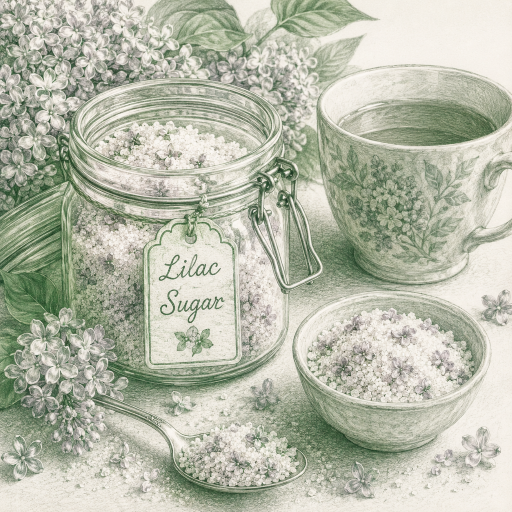
Ingredients
- white sugar — 2 cups
- fresh lilac florets — 1 cup
Instructions
- Layer sugar and lilac florets in a clean jar.
- Seal and let sit for 3–5 days.
- Shake occasionally.
- Strain out flowers if desired.
-
Lilac Syrup
A delicate floral syrup with soft spring fragrance, perfect for lemonade, sparkling water, tea, desserts, and cocktails.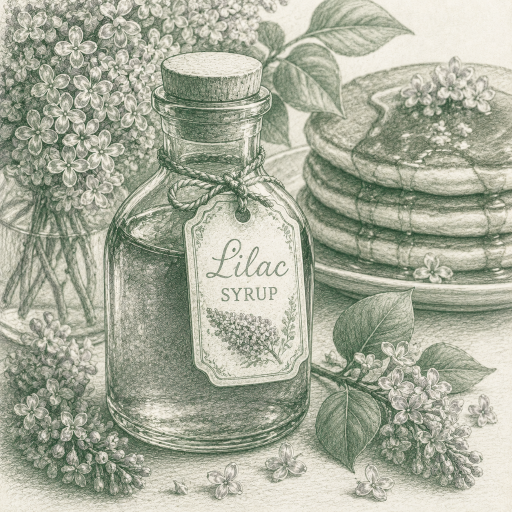
Ingredients
- fresh lilac florets — 2 cups
- water — 2 cups
- sugar — 2 cups
- lemon juice — 1 tablespoon
Instructions
- Bring water and sugar to a gentle simmer until dissolved.
- Remove from heat and add lilac florets.
- Cover and let steep overnight in refrigerator.
- Strain through fine mesh sieve.
- Add lemon juice and store refrigerated.
-
Lilac Lemonade
Interesting fact: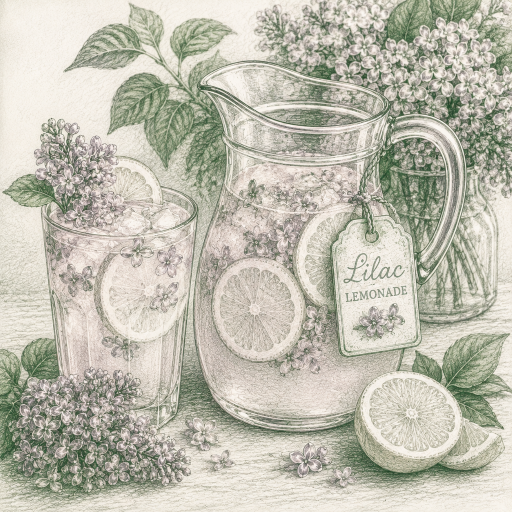
The lemon juice not only brightens flavor—it can also shift the syrup toward a more pink-purple color. Lilac Lemonade is one of the prettiest spring drinks imaginable.
Ingredients
- fresh lemon juice — 1 cup
- water — 4 cups
- lilac syrup — 1 cup
- ice — as needed
The flavor is subtle, refreshing, and very spring-like.Instructions
- Combine all ingredients.
- Stir well.
- Serve cold with lemon slices and fresh lilac florets.
-
Lilac Jelly
Lilac jelly became especially popular in cottage-style kitchens because it captured the fragrance of spring long after blooms disappeared. The finished jelly tastes lightly floral with gentle citrus notes.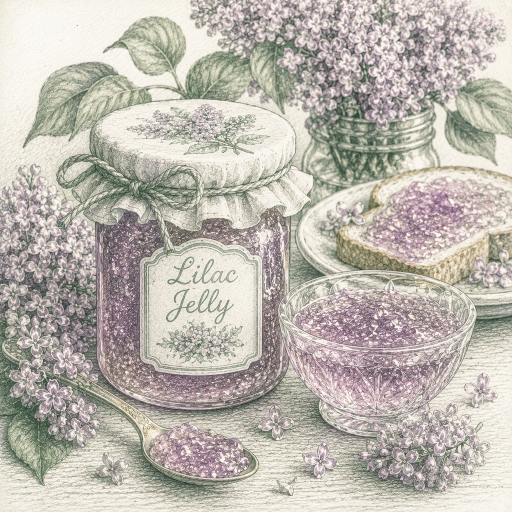
Ingredients
- fresh lilac florets — 2 cups
- water — 2 cups
- lemon juice — 2 tablespoons
- sugar — 4 cups
- powdered pectin — 1 package
Lilac jelly pairs beautifully with scones, soft cheeses, shortbread, tea cakes.Instructions
- Simmer lilac florets in water for 10 minutes.
- Strain and reserve liquid.
- Return liquid to pot.
- Add lemon juice and pectin.
- Bring to boil.
- Add sugar.
- Boil for 1 minute.
- Pour into sterilized jars.
-
Lilac Honey
Lilacs can also gently perfume honey.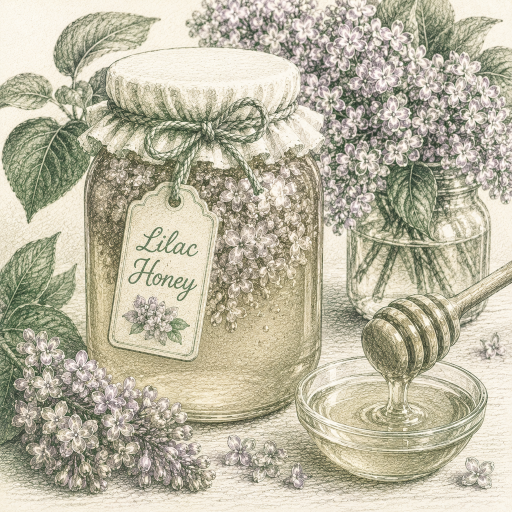
Instructions
- Simply place clean lilac florets into mild honey for several days, then strain. The result is subtle and elegant drizzled over yogurt, pancakes, ricotta toast and fruit.
-
Lilac Desserts
Lilacs work best in desserts with mild flavors that allow the floral notes to remain noticeable.Ideas
- Beautiful pairings include vanilla, lemon, honey, berry flavors and cream.
- Lilac-infused whipped cream is especially lovely with strawberries or sponge cake.
-
Candied Lilac Blossoms
Victorian cooks often crystallized flowers to decorate cakes and pastries.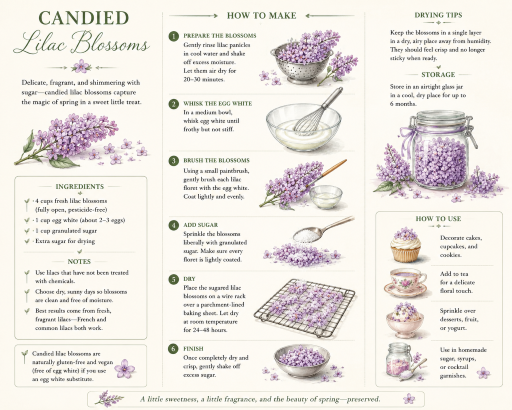
Instructions
- Lilacs can be candied by brushing florets lightly with egg white and coating them in superfine sugar.
- Once dried, they become delicate edible decorations for cakes and desserts.
- If using raw egg whites: use pasteurized eggs for safety.
-
-
Why Lilacs Feel So Special in Cooking
-
Part of lilacs’ charm is their short season.
Unlike ingredients available year-round, lilacs appear briefly and disappear quickly. Cooking with them feels tied to a very specific moment in spring.
That fleeting quality is exactly what makes them memorable.
- Lilacs are not bold culinary flowers. They are subtle, nostalgic, and delicate— flowers that whisper rather than shout.
- Used gently, they can turn ordinary recipes into something deeply connected to spring itself: fragrant, fleeting, and impossible to fully preserve except in memory and taste.
-