Few garden plants are as instantly recognizable as lavender. Long before it became a favorite in cottage gardens, lavender was treasured for its soothing fragrance, healing properties, and surprisingly versatile flavor. Today it perfumes soaps, perfumes, and sachets, but for centuries it also had an honored place in the kitchen.
Cooking with lavender is a lesson in restraint. Its floral aroma is powerful, yet its flavor is surprisingly delicate. Used sparingly, it adds elegant herbal notes with hints of citrus, rosemary, and mint. Used too generously, however, it can quickly overpower a dish and leave a bitter, perfumed taste.
The secret is to think of lavender as a spice rather than a vegetable. A small amount can transform an ordinary dessert or cup of tea into something unforgettable.
-
A Culinary Herb with Ancient Roots
- Lavender has accompanied human civilization for more than two thousand years.
- The Romans scented their bathhouses with it—the name Lavandula comes from the Latin lavare, meaning "to wash." But they also flavored wine, vinegars, honey, and roasted meats with lavender, believing it improved both digestion and mood.
- During the Middle Ages, monks cultivated lavender in monastery gardens throughout Europe. It found its way into herbal medicines, baked goods, and sweet preserves.
- By the Victorian era, lavender had become fashionable in elegant kitchens. Wealthy households infused sugar with dried blossoms, flavored biscuits and cakes, and served lavender lemonade during summer garden parties.
- Today, chefs have rediscovered what earlier generations already knew: lavender pairs beautifully with honey, lemon, berries, peaches, apricots, vanilla, chocolate, and cream.
-
Choosing the Right Lavender
- Not every lavender is equally suited for cooking.
- The best choice is English lavender (Lavandula angustifolia), whose flowers have a sweet, gentle flavor with relatively little bitterness.
- French and Spanish lavenders contain more camphor-like oils and are generally grown for ornament rather than cooking.
- Always harvest flowers from plants that have never been treated with pesticides or systemic insecticides.
- Pick blossoms on a dry morning just after they open, when their essential oils are strongest.
-
Fresh or Dried?
- Both have their place.
- Fresh flowers offer a lighter, greener flavor that is perfect for drinks and syrups.
- Dried buds become more concentrated and are ideal for baking.
- As a general guide: 1 teaspoon dried lavender ≈ 1 tablespoon fresh flowers
-
Lavender Recipes
-
The sugar keeps for months and makes wonderful homemade gifts.
Lavender Sugar
Perhaps the easiest way to begin cooking with lavender. The sugar slowly absorbs the herb's essential oils, becoming fragrant enough for tea, cookies, cakes, fresh fruit, or whipped cream.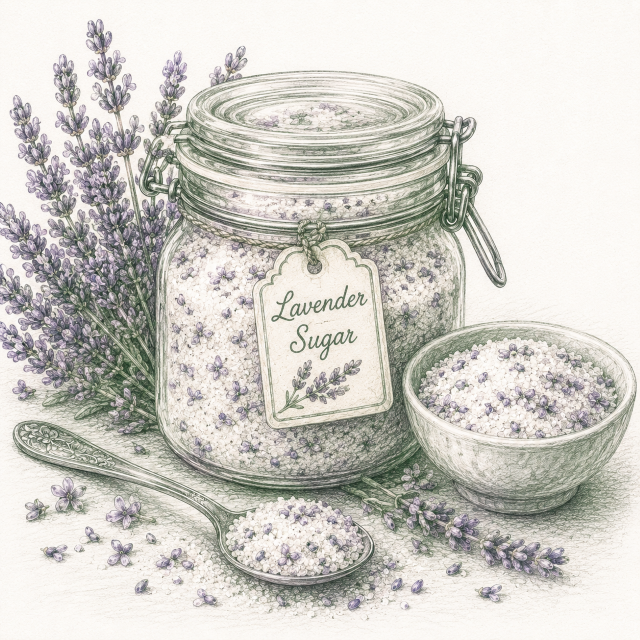
Ingredients
- white sugar — 2 cups
- dried culinary lavender buds — 2 tablespoons
Instructions
- Combine sugar and lavender in a clean glass jar.
- Seal tightly.
- Shake once each day.
- Allow to infuse for one week
- Sift out buds if desired.
-
Lavender Syrup
A classic ingredient for lemonade, iced tea, sparkling water, cocktails, and desserts.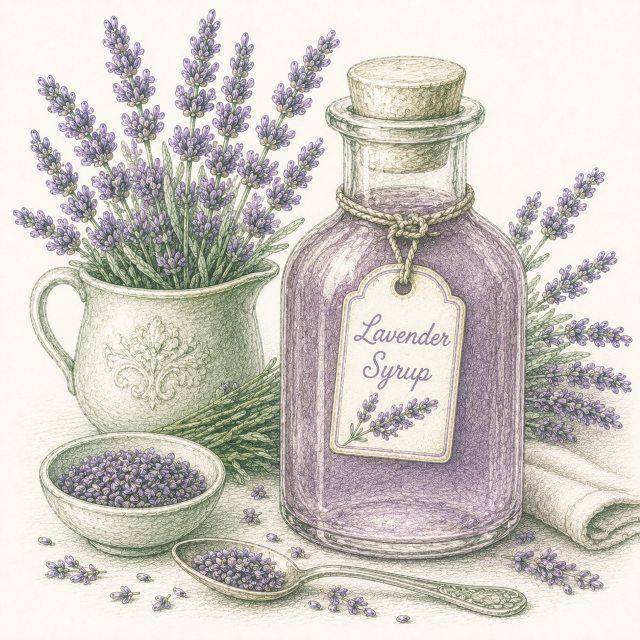
Ingredients
- water — 2 cups
- sugar — 2 cups
- dried lavender buds — 2 tablespoons
- lemon juice — 1 tablespoon
Instructions
- Bring water and sugar to a gentle simmer. Stir until dissolved.
- Remove from heat.
- Add lavender. Cover and steep for 30 minutes.
- Strain. Stir in lemon juice.
- Refrigerate.
-
Lavender Lemonade
One of the prettiest summer drinks. The floral notes soften the tartness of fresh lemons without making the drink overly sweet.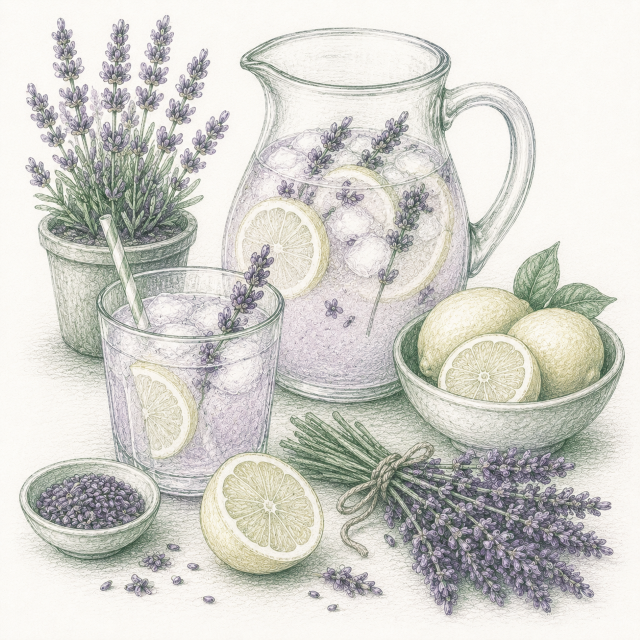
Ingredients
- fresh lemon juice — 1 cup
- lavender syrup — 1 cup
- cold water — 4 cups
- ice
- lemon slices
Instructions
- Combine all ingredients. Stir well.
- Serve over ice.
The flavor is subtle, refreshing, and very spring-like.
-
Lavender Honey
A favorite among beekeepers and herbalists.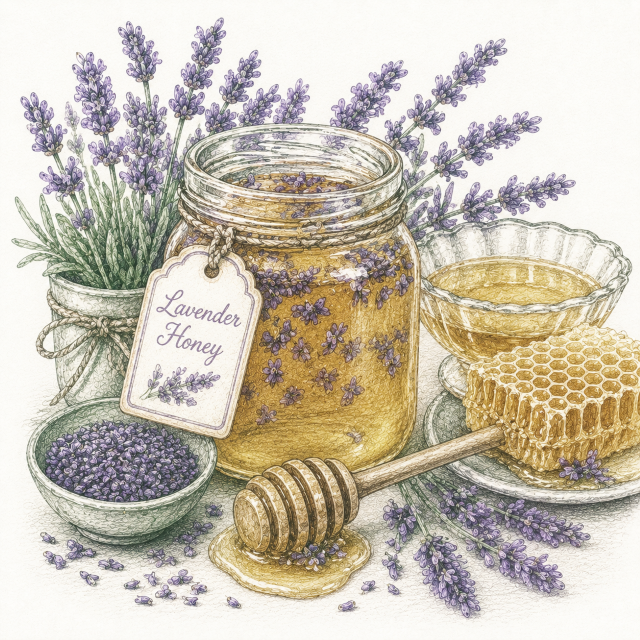
Ingredients
- mild honey — 2 cups
- dried lavender buds — 2 tablespoons
Wonderful with yogurt, toast, cheeses, and roasted peaches.Instructions
- Warm honey gently (do not boil).
- Stir in lavender.
- Allow to infuse for several days.
- Strain if desired.
-
Lavender Shortbread Cookies
Lavender has been paired with butter for centuries. Rich, buttery shortbread perfectly balances the herb's floral aroma.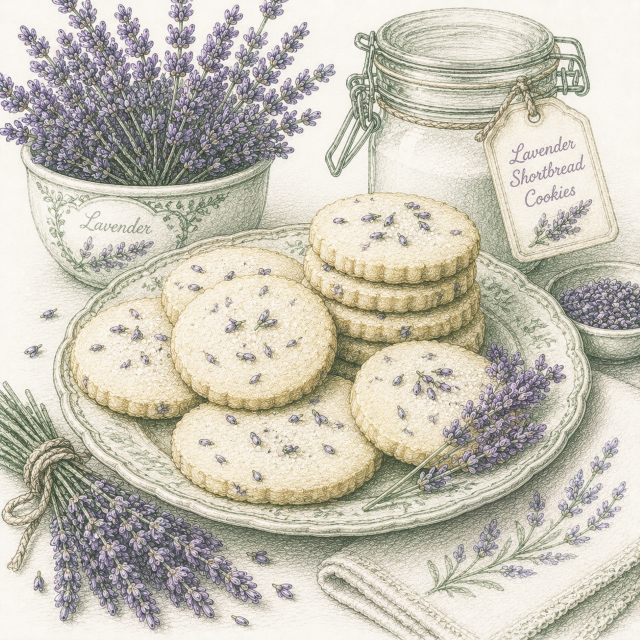
Ingredients
- butter — 1 cup
- sugar — 1/2 cup
- flour — 2 cups
- dried lavender buds — 1 tablespoon
- salt — 1/4 teaspoon
Instructions
- Cream butter and sugar.
- Mix in lavender.
- Add flour and salt.
- Chill dough.
- Slice.
- Bake at 325°F (163°C) for about 18–20 minutes.
-
Lavender Ice Cream
Perhaps the most famous lavender dessert. The cream softens the herbal notes, producing a delicate floral flavor.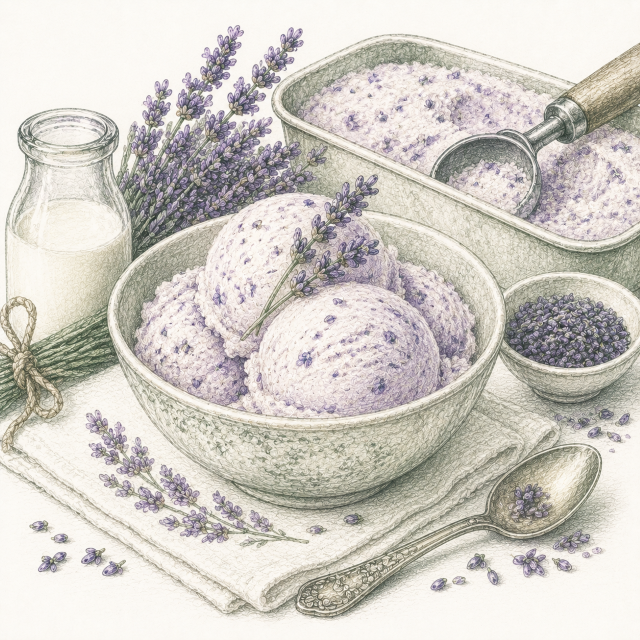
Ingredients
- heavy cream — 2 cups
- whole milk — 1 cup
- sugar — 3/4 cup
- egg yolks — 5
- dried lavender buds — 2 teaspoons
Instructions
- Heat cream, milk, and lavender.
- Steep for 20 minutes. Strain.
- Prepare a custard with egg yolks and sugar. Chill thoroughly.
- Freeze according to your ice cream maker's instructions.
-
Lavender Tea
Simple, calming, and one of the oldest lavender preparations.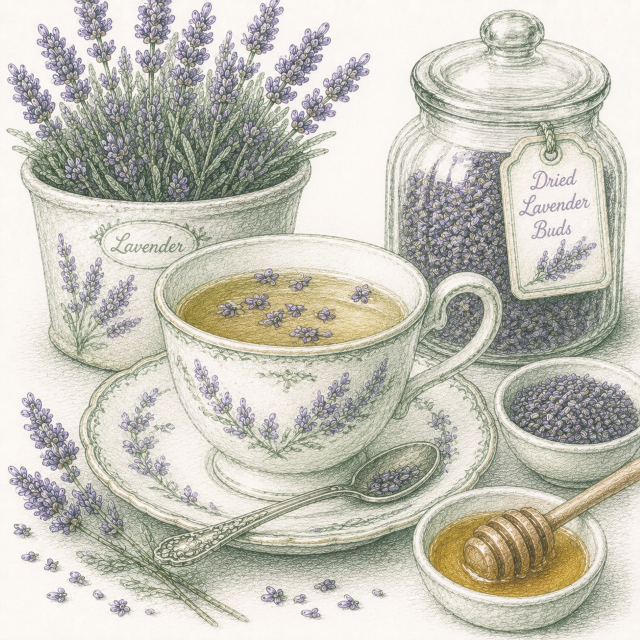
Ingredients
- dried lavender buds — 1 teaspoon
- hot water — 1 cup
- honey (optional)
Instructions
- Pour hot water over lavender. Steep for 5 minutes.
- Strain.
- Sweeten with honey if desired.
-
-
Lavender in Savory Cooking
- Lavender is not limited to desserts. It appears in the famous French herb blend Herbes de Provence, traditionally used to season roast chicken, lamb, roasted potatoes, grilled vegetables, olive oil and marinades. Only a small pinch is needed. Too much can overwhelm the dish.
-
What Flavors Pair Best with Lavender?
- Lavender is surprisingly versatile when paired thoughtfully. It complements honey, lemon, orange, vanilla, blueberries, blackberries, peaches, apricots, pears, strawberries, dark chocolate, white chocolate, cream, goat cheese, rosemary and thyme.
-
A Taste of the Summer Garden
-
Unlike many culinary herbs, lavender doesn't demand attention. Instead, it quietly elevates the foods around it. A spoonful of lavender honey over warm biscuits, a few blossoms folded into cookie dough, or a glass of lavender lemonade on a July afternoon can capture something difficult to describe—the scent of a sunny garden carried into the kitchen.
Perhaps that is why lavender has remained beloved for centuries. It is more than a seasoning. It is a reminder that some of the most memorable flavors come not from exotic ingredients, but from flowers blooming just outside the back door.
-